

Important: This information is for general education and does not replace an individual dental assessment. If you have concerns about your child’s teeth or symptoms such as pain or swelling, seek dental advice.
Helping children build strong oral habits at home is less about perfect technique and more about a routine that happens reliably, even on busy days. When these habits are consistent, they can reduce the risk of tooth decay and gum problems, and they often make dental visits feel more straightforward.
Below are practical, age-appropriate child dental care tips you can use straight away, with clear steps, realistic expectations, and a focus on prevention.
Why home habits matter more than “perfect brushing”
Tooth decay is largely preventable, but it can develop quietly through small daily patterns: brushing that gets rushed, frequent sugary snacks, and bedtime drinks that are not water. Our goal is consistent protection, not flawless brushing every time.
We usually come back to three pillars:
- Brush twice daily with fluoride toothpaste
- Reduce how often teeth are exposed to sugar
- Keep up with regular dental check-ups
For a reliable baseline, the NHS advice on taking care of children’s teeth outlines the essentials, including brushing twice a day and spitting after brushing rather than rinsing.
What we often discuss with families
From day-to-day conversations with parents and carers, common patterns include missed back teeth at bedtime, a quick brush that skips the gumline, or sweet drinks being sipped between meals without anyone realising how often teeth are exposed.
Building a routine that actually sticks
Step 1: Keep brushing consistent and predictable
Children do best when brushing is predictable rather than debated. It often helps when brushing is treated like any other daily routine.
A routine that tends to hold:
- Brush last thing at night and one other time during the day
- Keep toothbrushes where children can see them and reach them safely
- Use a two-minute timer or song so the “end point” is clear
- Offer small choices that keep the outcome the same, such as which toothbrush or which order (top teeth first or bottom teeth first)
A quick safety reminder: try not to let children walk around with a toothbrush in their mouth. If they trip, there is a risk of mouth injury.
Step 2: Use fluoride toothpaste correctly
Fluoride toothpaste helps strengthen enamel and supports decay prevention. The key is to use an age-appropriate amount and build the habit of brushing twice daily.
The Delivering Better Oral Health guidance on oral hygiene supports fluoride toothpaste and age-appropriate amounts, alongside twice-daily brushing.
Here is a simple guide you can keep by the sink:
| Age | Toothpaste amount | Practical aim | Supervision |
| Under 3 | Smear (thin film) | Small amount, reduce swallowing risk | Adult brushes |
| 3 to 6 | Pea-sized blob | Consistent fluoride exposure | Adult supervises closely |
| 7+ | Pea-sized blob | Build independence with oversight | Supervise until reliable |
In general, guidance recommends spitting out after brushing and avoiding rinsing with water straight away, as this helps fluoride stay on the teeth.
A small but important nuance
Prevention advice can vary depending on age and decay risk. Children at higher risk of decay may be advised to use different fluoride strengths, and this should be recommended by a dental professional.
Step 3: Keep technique simple and repeatable
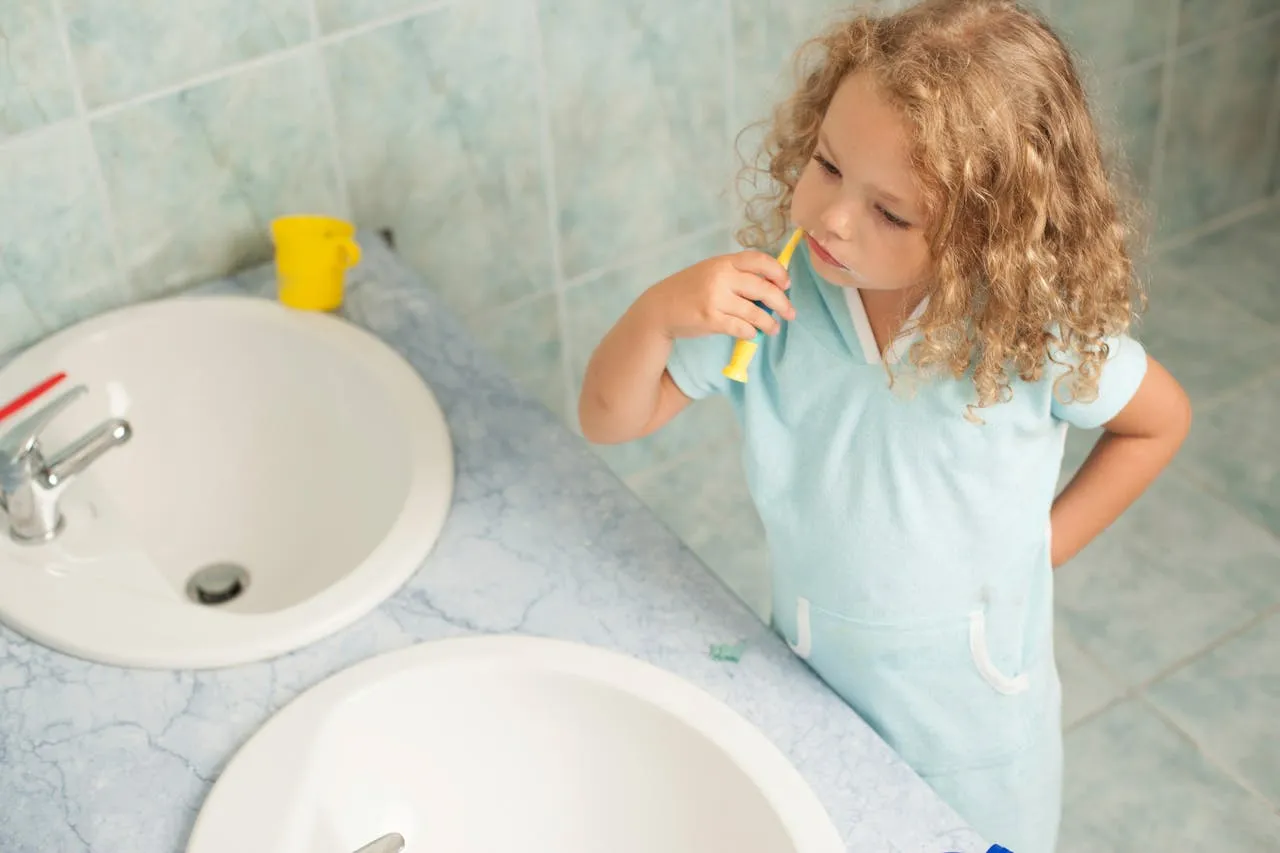
We do not need children to learn complicated methods. We do need them to clean every surface consistently.
A simple “same order every time” method:
- Start at the back teeth on one side
- Brush the outside surfaces in small circles
- Brush the inside surfaces with the same small circles
- Brush the chewing surfaces with short back-and-forth strokes
- Finish with the other side, then repeat for the other arch
This approach can reduce missed areas because children are not guessing where they have already brushed.
Step 4: Know where children usually miss
This is one of the most useful child dental care tips for parents: most brushing issues are not about effort; they are about access.
Common missed areas
- The back molars, especially the chewing grooves
- The gumline, where plaque builds up
- The inside surfaces of the lower front teeth
If you want a practical brushing refresher for adults, too, our checklist on common mistakes when looking after your teeth is a helpful reference.
Step 5: Add interdental cleaning when it is relevant
For younger children, brushing and fluoride do most of the protective work. Interdental cleaning becomes more relevant when teeth are tightly touching or when your child’s dental team has flagged a higher decay risk.
A realistic approach:
- Start with a few times per week
- Use floss sticks if access is difficult
- Expect to help for a while, even with older children
If braces or appliances are involved, cleaning becomes more complex. Our guide to orthodontic appliances and home care explains what changes and where plaque tends to collect.
Food and drink habits that protect teeth
Sugar affects teeth in two ways: how much and how often. Frequency is the one that catches families out, because small amounts can become constant exposure if children are sipping or snacking throughout the day.
The Delivering Better Oral Health guidance on healthier eating supports reducing how often sugary foods and drinks appear, and keeping them to mealtimes where possible.
Step 6: Keep sugary foods and drinks to mealtimes
This approach can reduce how often teeth are exposed to sugar. Between meals, water is usually the best choice for teeth.
Tooth-friendly snack ideas:
- Cheese cubes
- Plain yoghurt (check for added sugars)
- Vegetable sticks
- Whole fruit
- Toast, oatcakes, or plain crackers
- Eggs
What we often discuss with families
A pattern we often discuss with parents of children who have early signs of decay is frequent sipping of squash or juice outside mealtimes. Even when diluted, this can keep teeth under repeated acid exposure.

Step 7: Keep bedtime drinks simple
At night, saliva flow drops, which reduces the mouth’s natural protective effect. If a child needs a drink during the night, water is usually the best option for teeth.
If you would like a plain-English overview of sugar and health, the NHS guide to sugar in the diet is a useful reference.
What the evidence says about fluoride toothpaste
Parents often ask whether fluoride really matters. Evidence reviews support fluoride toothpaste for caries prevention compared with non-fluoride toothpaste.
The Cochrane evidence review on fluoride toothpaste strength summarises research indicating that fluoride toothpaste helps prevent decay, and that higher concentrations tend to provide greater preventive benefit, balanced with age-appropriate use and supervision.
That is why our home routine advice focuses on fluoride toothpaste, using the right amount, and avoiding rinsing with water straight away after brushing.
Common hurdles and practical fixes
“They hate brushing”
We can keep the boundary while lowering the battle.
- Start with a shorter brush and build up
- Let them “have a go”, then you “finish properly”
- Keep the script consistent: “Brush, spit, done”
“They swallow toothpaste”
Use the correct amount (smear or pea-sized). Practise spitting at another time of day, away from the pressure of bedtime. If swallowing is persistent, it is worth discussing at a check-up so we can give tailored advice.
“They brush quickly and miss loads”
This is normal, especially when children are tired. Supervision helps, as does sticking to the same brushing order. Many children still need an adult “finishing brush” until they can reliably reach back teeth and brush the gumline.
“We have sensory challenges”
In these cases, we focus on what is achievable and build from there:
- Try a softer brush head
- Keep sessions short at first, then gradually increase
- Consider brushing at a calmer time of day, not only at the most stressful point in the evening
When to seek advice sooner rather than later
Most day-to-day issues can be handled with routine improvements. If your child has any of the following, it is sensible to contact a dental professional for advice, particularly if symptoms are persistent or worsening:
- Toothache that persists
- Swelling, fever, or a bad taste in the mouth
- A knocked, chipped, or displaced tooth
- Bleeding that does not settle
- White, brown, or dark spots that are spreading
This is not about alarming anyone. It is about acting early, when issues are often easier to manage.
Keeping prevention on track with routine dental care
Home habits do most of the preventive work. Routine appointments help us check that those habits are working, spot early changes, and give advice based on your child’s stage of development.
If you would like to see what preventive appointments involve and how we support families long-term, visit our Routine Dental Care service page. It is a straightforward next step if you want reassurance that your child’s oral health is on track.
If you want a clearer picture of why these appointments matter, our post on why regular check-ups matter explains what we look for and how early action can make management simpler.
In summary: the habits worth protecting
Strong routines beat occasional bursts of enthusiasm. If you want a simple plan to follow, this is it:
- Brush twice daily with fluoride toothpaste, using the right amount
- Spit out after brushing and avoid rinsing with water straight away
- Pay attention to the back teeth and the gumline
- Keep sugary foods and drinks to mealtimes, and choose water between meals
- Keep regular check-ups so prevention stays on track
These child dental care tips are about giving your child a dependable routine that protects their teeth as they grow, and keeping oral health simple enough to maintain for the long run.