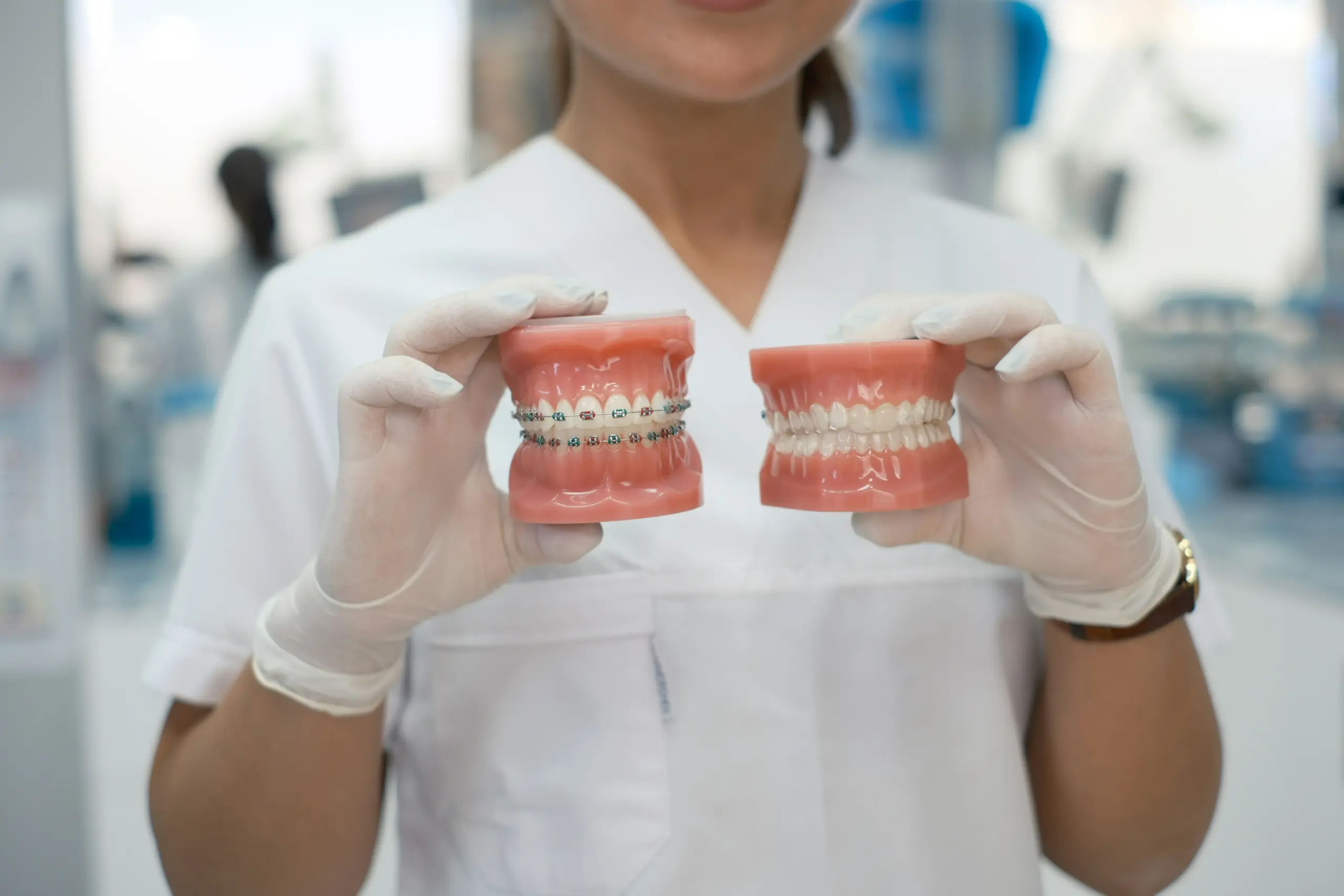


How do braces work? Fixed braces use brackets and an archwire to apply a small, steady force to each tooth, and the tissue holding each root in its socket responds to that force, allowing the surrounding bone to be gradually removed and rebuilt as the tooth moves. That is how braces move teeth, a little at a time, and it does not involve breaking the jawbone.
The wire only supplies the force though, so it cannot decide where a tooth should end up. Someone has to choose which way each tooth moves and in what order, and that matters because straight-looking front teeth are only part of the result. The roots beneath the gum and the way your upper and lower teeth meet when you bite need controlling too, which is why treatment often carries on after the teeth look straight.
Spotting what still needs doing once the teeth look straight takes clinical training, and our Clinical Director at Birchgrove Dental in Cardiff, Dr Craig Lewis, has it. He is a dentist with a postgraduate diploma in orthodontics and over 11 years’ experience treating adults and children in orthodontics. He also explains each step of your plan, so you can understand why certain approaches are recommended for your teeth.
How do braces work to move teeth?
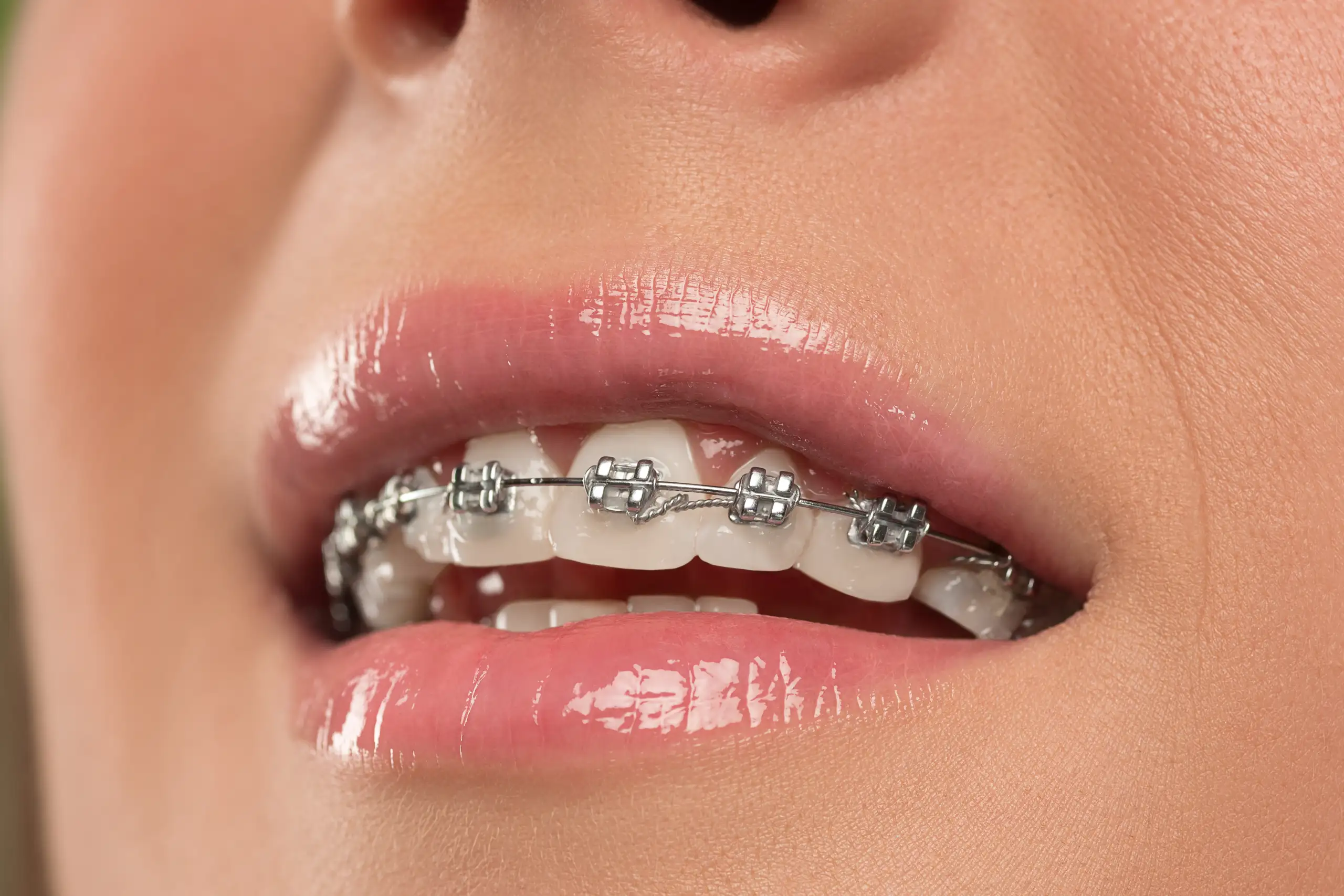
Fixed braces work by transferring force from an archwire to the teeth through small brackets attached to them. The brackets give the wire a way to act on individual teeth, while the wire connects them and helps guide their movement.
When fixed braces are fitted, a small bracket is bonded to the front of each tooth using dental adhesive. A thin metal wire, called an archwire, is then threaded through a slot in each bracket, so it links all the teeth in one jaw. The NHS explains that this wire applies a small amount of pressure to the teeth. That pressure comes from the wire pressing against the slot in each bracket, and it moves the tooth in the direction the treatment plan sets. Because the wire connects the teeth along the arch, which is the curve of teeth in one jaw, we also consider how each planned movement affects the others.
Each component plays a part in that process.
| Part | What it does |
| Bracket | Attaches to the tooth and transfers force from the archwire |
| Archwire | Connects the brackets and carries the force that moves the teeth |
| Elastic ring (module) or clip | Holds the archwire inside the bracket slot |
| Additional elastics or springs | Provide extra forces for particular tooth movements or bite correction |
The small elastic rings fitted around brackets mainly hold the wire in place. They are different from the larger elastic bands that may be attached between the upper and lower braces to help correct how the teeth meet. Not everyone needs these additional elastics, because the components used depend on the movements required.
With a bracket on every tooth, we can control movements such as turning a rotated tooth or correcting aspects of the bite, which is why we use fixed metal braces for cases that include significant bite correction and rotated teeth. Our fixed metal braces page shows who they suit and how to clean around them.
That explains how force reaches a tooth, but not how a tooth held in the jawbone can move, which depends on what happens in the tissue around its root.
How do braces move teeth through the jawbone?
Braces move teeth through the jawbone by making the bone change shape around the root, so the tooth is never forced through solid bone. The bone on one side of the root is gradually removed, while new bone is built on the other side, so the socket reshapes around the tooth’s new position.
That is possible because a tooth does not sit directly against bone. Around each root there is a thin, springy layer of fibres, which dentists call the periodontal ligament, and it holds the root in its socket, cushions it when you bite and passes force from the tooth on to the bone.
Teeth move with braces in three steps that happen together.
- First, the archwire applies force through the bracket, which puts pressure on the layer of fibres around the tooth’s root.
- Next, the layer is squashed on the side the tooth is moving towards, whereas the layer on the opposite side is stretched.
- Then bone is removed where the layer is squashed and built where it is stretched, so the socket reshapes around the tooth as it moves.
A 2015 review in the Scientific World Journal describes mainly bone-removing activity where the ligament is compressed and mainly bone-building activity where it is stretched. The real process is more complex than three steps, but this is the principle behind fixed brace movement.
Braces cannot rush this process, because the cells that remove and build bone can only work at a limited pace, which is why teeth move gradually and why pushing harder would not necessarily make them move faster. According to the same review, force beyond what the tissue can adapt to can damage it, so we use controlled forces and review your teeth regularly.
Because this process depends on healthy tissue around the root, we check that your teeth and gums are healthy before any tooth is moved. Gum disease affects the ligament and bone that hold the teeth in place, and moving teeth with active gum disease or decay can cause harm, so treating an unhealthy mouth first is important.
How do braces know which way to move teeth?
Braces do not know where a tooth should go, because the direction is planned for your teeth before the wires go on. A wire only supplies force, so the direction is set by where each bracket sits on the tooth, the wire chosen for each stage, and any elastics or springs added for a particular movement.
Think of each bracket as a handle fixed to the tooth. The wire acts through that handle, and where we position the bracket helps determine how the tooth tips, turns or moves as treatment progresses, so each bracket is positioned for its own tooth.
Once you understand how we guide an individual tooth, the next thing is deciding which movements need to happen first. Some teeth can move together, while others need space or another correction before they can move into position, so we choose the order to suit your teeth. In a crowded mouth, for example, space may need to be made before a tooth can move into line, and a rotated tooth may need turning before its root is fine-tuned, although these stages can overlap with bite correction.
Choosing how to move your teeth takes more than deciding which braces you prefer. Here at Birchgrove Dental, our Clinical Director, Dr Craig Lewis, plans and fits fixed braces, and he is trained and approved in several orthodontic systems. These include Damon braces, which use a built-in sliding clip to hold the wire instead of small rubber rings, Ormco Symetri braces, which have tooth-coloured ceramic brackets that are less noticeable, and Invisalign, which moves teeth with a series of clear, removable aligners instead of brackets and wires.
Dr Lewis knows how each system works, so we can recommend what suits your teeth and not rely on one approach. Although they all use controlled forces to move teeth, they are not equally suitable for every case, so he looks at the movements your teeth need, explains which options can achieve them and takes your preferences into account before recommending treatment.
How can braces move teeth in different directions?
Braces move teeth in different directions by changing the direction in which the force acts on each tooth, and each direction produces a different kind of movement. Which movements a tooth needs depends on what has to be corrected, and one tooth may need several of them during treatment. The table below sets them out.
| Movement | What it means |
| Sideways | Moving a tooth along the row of teeth, towards its neighbour |
| Forward or back | Moving a tooth towards the lips or cheek, or back towards the tongue |
| Turning (rotation) | Turning a twisted tooth in its socket, like a key in a lock |
| Up or down (vertical) | Moving a tooth further into its socket or further out of it |
| Leaning (tipping) | Changing the angle of a tooth, with the visible part (the crown) moving more than the root |
| Whole-tooth movement (bodily) | Moving the crown and the root together |
Sideways movement closes gaps and makes room for crowded teeth, whereas forward or back movement changes how far a tooth sits out from the row. These movements also matter for the bite. In a crossbite, some of the upper teeth bite inside the lower teeth instead of outside them, and correcting it can involve moving teeth in more than one direction.
Up and down movement works on the same principle, with the tooth moving further into its socket or further out of it. Dentists call this intrusion when the tooth goes in and extrusion when it comes out. It matters for the bite, because in a deep bite the top front teeth cover too much of the bottom ones, and changing the height of teeth is part of correcting that.
Leaning a tooth and moving it as a whole differ in what happens to the root. Leaning a tooth is a little like tilting a fence post, where the top moves further than the base, whereas moving the whole tooth is more like sliding the entire post, root included. A bracket sits on the crown, so the force reaches the top of the tooth first, which makes leaning the simpler movement and whole-tooth movement the one that needs more precise control of the force. Some movements need more time and control than others, which helps explain why you may notice changes in certain teeth before others.
How fast do braces start to move teeth?
Braces begin working as soon as they apply force to your teeth, although you will not see a change straight away. Each tooth can shift very slightly within its socket at first, but lasting movement takes longer as the bone around its root gradually changes, so it can take weeks, and sometimes a few months, before you see a difference in the mirror.
You may feel some soreness when your braces are first fitted. The NHS explains that this can last a few days, and our metal braces guidance explains that tenderness may return for a few days after an adjustment. Some people feel very little, which is normal too. A brace that no longer feels tight, or never felt sore at all, does not mean it has stopped working, because progress shows in how your teeth have moved at each appointment, not in how they feel.
That first visible difference is only the start though, because at our practice here in Cardiff, orthodontic treatment generally takes around six months to two years, depending on how much correction your teeth and bite need, and we confirm your own timeframe at your assessment.
Missing an adjustment appointment can delay treatment, because we use each appointment to see how far your teeth have moved and to set up the next stage. A broken bracket or wire can delay it too, because the tooth may not move as planned until we repair it. That is why regular appointments are part of treatment.
Why do braces need tightening or adjusting?
Braces need adjusting because, as your teeth change position, the wire, and occasionally a bracket, may need changing to guide the next stage of movement. Patients often call these visits “tightening”, although an adjustment does not always mean making the wire tighter. At each visit, we check how your teeth and bite are responding to treatment before deciding what needs to change. That might mean fitting a different wire, changing how elastics are used or, in some cases, repositioning a bracket. We also check that every bracket is secure and refit one if it has come away. At some of your appointments, the wire stays in and we only replace the small rubber rings, while at other appointments we take the wire out and fit a new one.
Early in treatment, we often use thin, flexible wires that can work with teeth that are crowded or twisted. As those teeth begin to line up, we can introduce different wires to give us more control over their position, including how the roots and bite come together. The force needs to suit the movement we are trying to achieve and how the supporting tissues respond.
The NHS explains that adjustment appointments are usually arranged every six to eight weeks, although your own schedule may differ depending on your treatment.
What happens after braces are removed?
After your braces come off, retainers help hold your teeth in their new positions, because without them, teeth can gradually move back towards where they were before treatment. The British Orthodontic Society explains that retainers are essential in almost all cases to reduce the risk of teeth moving after braces are removed.
Even after orthodontic treatment, teeth are not fixed permanently in one position. They can continue to shift as you get older, which is why wearing your retainers as instructed matters long after your braces have been removed.
Our fixed brace treatment includes two types of retainer. A fixed retainer is a thin wire bonded behind your teeth, where it stays out of sight. You do not have to remember to put it in, but you still need to clean carefully around the wire because plaque can collect there. We also provide a removable retainer that you can take out for cleaning. It is designed for night-time wear, and we will explain how often you need to use it.
Your teeth can begin to shift without a retainer holding them, so if either retainer breaks, comes loose or is lost, you should contact us promptly and not wait for your next appointment.
Frequently asked questions about braces
Can braces move teeth in adults?
Yes, braces can move adult teeth as well as children’s teeth. The British Orthodontic Society explains that teeth can be moved at any age, provided the teeth and gums are healthy.
How do metal braces move teeth compared with ceramic braces?
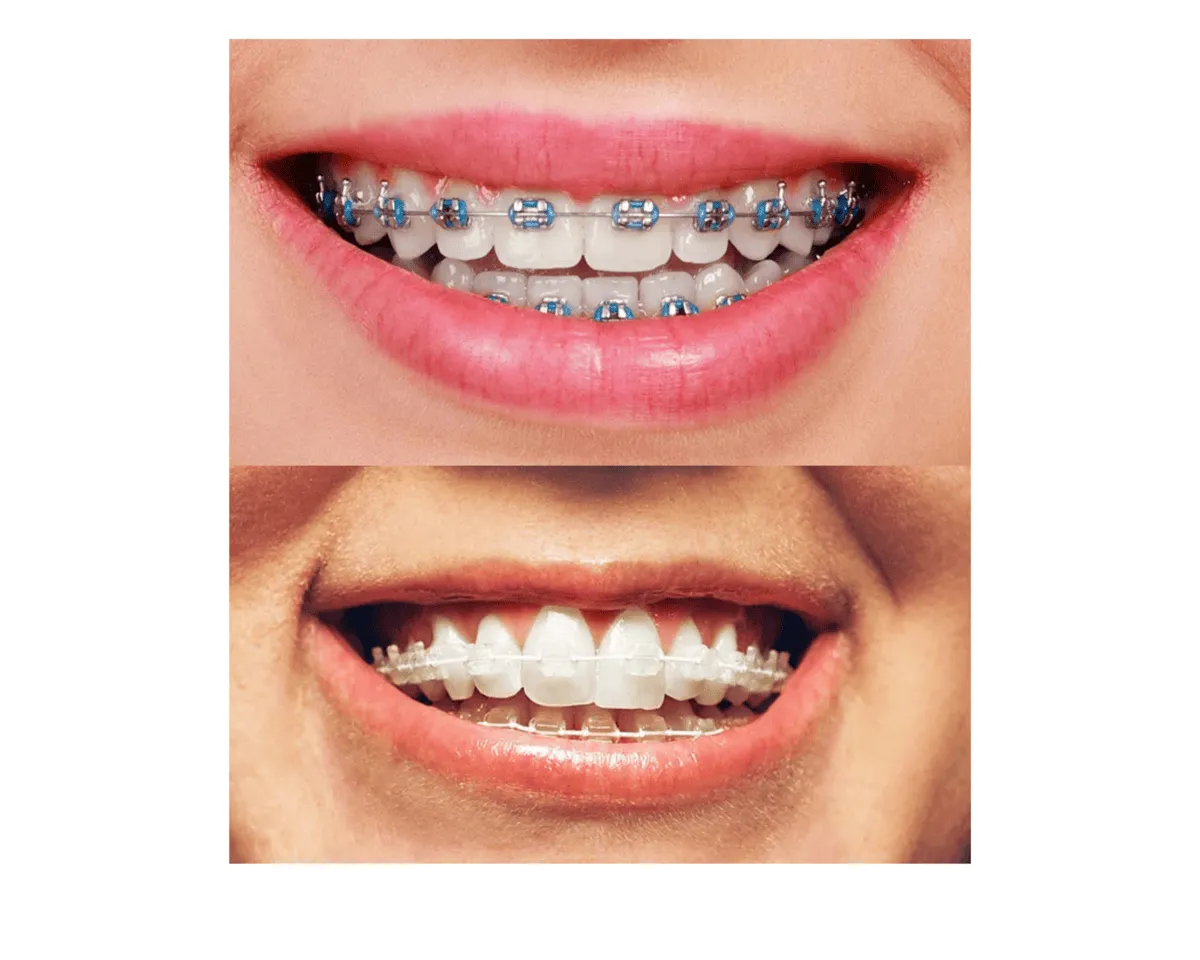
Metal and ceramic braces move teeth in the same basic way, with brackets and an archwire applying the force, so the difference is in the brackets. Ceramic brackets are tooth-coloured and less noticeable, but the British Orthodontic Society explains that they are more prone to breakage than metal ones and the wire moves less freely through them, so treatment may take longer. Some more involved cases are handled better with fixed metal braces.
Do braces move teeth faster than Invisalign?
Neither treatment is automatically faster, and our Invisalign vs braces guide explains why, based on a systematic review. Some tooth movements are better suited to fixed braces, while others can be managed with clear aligners, and we assess your teeth before recommending which option suits your treatment.
Is it normal for teeth to feel loose during braces treatment?
A tooth may feel slightly loose while braces are moving it, because the tissues supporting its root are responding to orthodontic force. This can happen during treatment and does not always mean something is wrong. However, if a tooth feels unusually loose, becomes increasingly mobile or is particularly painful when you bite, contact us so we can check it rather than assuming the braces are responsible.
What happens if I do not wear my elastics?
If we have prescribed elastics, not wearing them as instructed can delay the tooth or bite movements they are meant to help with, because the extra force they provide is part of that stage of your treatment. If wearing them causes significant discomfort or headaches, let us know so we can check the fit and instructions rather than leaving them out without advice. Doubling up on elastics to make up for missed wear is not a good idea either, because force beyond what the plan intends can be uncomfortable and can harm the tissue around the root.
What should I do if a bracket comes loose or a wire sticks out?
Phone us on 029 2069 3858 and tell us what has happened. A loose bracket can affect how force reaches the tooth and may delay treatment, so we will arrange a visit to refit it. If a wire is rubbing your cheek or lip, orthodontic wax can help cover the sharp area until your visit. Cutting or bending the wire yourself changes the force on your teeth, so it is best to wait for our team’s instructions.
Now that you know how braces work, the next step is finding out what your own teeth need. At Birchgrove Dental in Cardiff, Dr Craig Lewis plans and fits your fixed braces, and you do not need a referral to see us. Fixed brace treatment with us starts from £1,950, including teeth whitening, a hidden wire retainer and a night-time removable retainer. Before booking, you can send us photographs of your teeth through Send a Selfie. Within 24 hours, our team will send you an initial treatment recommendation, an estimated cost and a timeframe, free of charge. You can then book an assessment with us at Birchgrove Dental to have your teeth and bite examined and to discuss the recommended treatment.